web stats
Showing posts with label bollywood. Show all posts

Monday, March 02, 2009

Slumdog Millionaire - On popular demand.

Great movie and anything that I would say now, most likely, has already been spoken, analyzed, criticised, and accepted. So, let me cut to the chase. The post is on popular demand, non-south Asians asking for translation of Jai ho song lyrics.
Love the music by A R Rehman, awesomeness of Gulzar's lyrics, and Sukhwinder's voice. Without further ado ...
Hindi Version:

Jai Ho!

Aaja aaja jind shamiyaane ke taley
Aaja zari waale neele aasmaane ke taley

Jai Ho!

Ratti ratti sachchi maine jaan gawayi hai
Nach Nach koylon pe raat bitaayi hai
Ankhiyon ki neend maine phoonkon se udaa di
Gin gin taarey maine ungli jalayi hai
Eh Aaja aaja jind shamiyaane ke taley
Aaja zari waale neele aasmaane ke taley
Baila! Baila!(Dance! Dance!)
Ahora conmigo, tu baila para hoy(Now with me, you dance for today)
Por nuestro dia de movidas,(For our day of moves,)
los problemas los que sean(whatever problems may be)
Salud!(Cheers!)
Baila! Baila!(Dance! Dance!)

Jai Ho!

Chakh le, haan chakh le, yeh raat shehed hai
Chakh le, haan rakh le,
Dil hai, dil aakhri hadd hai
Kaala kaala kaajal tera
Koi kaala jaadu hai na?
Aaja aaja jind shamiyaane ke taley
Aaja zari waale neele aasmaane ke taley

Jai Ho!

Kab se haan kab se jo lab pe ruki hai
Keh de, keh de, haan keh de
Ab aankh jhuki hai
Aisi aisi roshan aankhein
Roshan dono heerey hain kya?
Aaja aaja jind shamiyaane ke taley
Aaja zari waale neele aasmaane ke taley

Jai Ho!

English translation (transliteration to a great extent to retain the poetic essence and does not really do justice to the original.):
Jai Ho =Something between “Hail” and “Hallelujah”

Come, come my Life, under the canopy
Come under the blue brocade sky!

Iota by iota, I have lost my life, in faith
I’ve passed this night dancing on coals
I blew away the sleep that was in my eyes
I counted the stars till my finger burned

Come, come my Life, under the canopy
Come under the blue brocade sky!

Taste it, taste it, this night is honey
Taste it, and keep it,
It’s a heart; the heart is the final limit
You dark black kohl
It’s some black magic, isn’t it?

Come, come my Life, under the canopy
Come under the blue brocade sky!

For how long, how very long
It’s been on your lips
Say it, now say it
The eye is downcast
Such lit up eyes Are they two lit-up dimaonds?

Come, come my Life, under the canopy
Come under the blue brocade sky!
Credit: inkspillz.blogspot.com

Monday, April 14, 2008

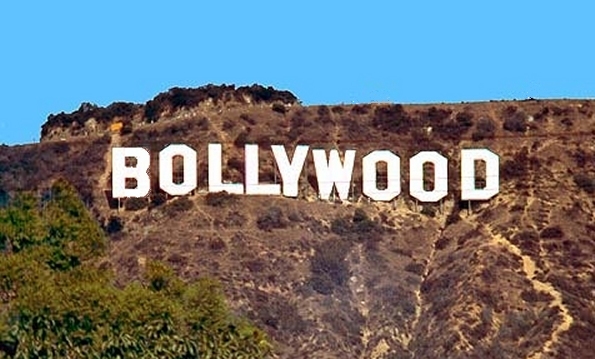
8 things Bollywood, I knew not.

And, here I shamelessly reproduce them for you. Original can be found here.

1.”Bollywood” vs. “India”. You hear again and again that Bollywood is the biggest film industry in the world, producing 800-1000 films a year. Actually this isn't strictly correct. It's the Indian film industry that produces that many films; Bollywood -– defined as commercial Hindi films produced in or around Bombay -– produces only about 150-200 films a year. According to Ganti, both the Telegu and Tamil film industries produce equal numbers of films (though I suspect budgets and audiences are probably smaller).

2.Taxation. Unlike in the U.S., where the film industry has always been treated by the government as a legitimate business, in India for many years, the film industry was treated as a vice, and taxed egregiously, at rates between 25 and 75 percent. This is so despite the fact that the film industry is the second largest in the country in terms of capital investment, and the fifth largest in terms of people employed.

Moreover, the tax is not just one tax, but a whole series of them, affecting the producers, distributors, and exhibitors of films. States use taxes to protect local language cinemas, and the Indian government waives taxes on films that are deemed to be especially patriotic (recently, films like Lakshya and LOC: Kargil were 'tax-free'. So the next time you see some uber-patriotic war film and wonder how Bollywood got so patriotic all of a sudden, keep in mind that there's a profit-margin in there.)

The tax situation has improved somewhat since May 1998, when the government finally granted the film industry the status of an actual “industry,” which means some alleviation of taxes, as well as smaller perks like reduced rates for electricity. However, taxes on films are still pretty high.

With all the tax, it's a wonder that the industry survived at all, especially during the deep recession in the early 1970s, when the government imposed a 250 percent tariff on imported film stock.

3. Flops. The success rate for Bollywood films is 15-20 percent a year. The vast majority of films are 'flops'. The industry survives because there is always some rich sap ready to invest in another film (see #6 below).

4. Number of Prints. The number of prints made for even big films is no more than 500 or so, including prints to be sent abroad. Compare to Hollywood, which releases big films on 3000 or more screens at once in the U.S. alone. One has to keep in mind, of course, that normal (i.e., non-multiplex) movie theaters in India are much larger than in America. A big movie theater in India can seat up to 2500 people.

5. Box Office totals. I've often wondered why we don't get precise box office totals for Bollywood releases the way we do in Hollywood. According to Ganti, while theaters at the main urban centers give quite specific box office numbers, the smaller centers (which also sometimes get films a little later) don't report their earnings accurately or consistently.

6. Financing. Bollywood movies are produced and financed in a completely chaotic way. Here are two paragraphs from Ganti on the decentralized, flexible Bollywood system:
The industry is neither vertically nor horizontally integrated in the manner of the major Hollywood studios or multinational entertainment conglomerates. 'Studios' within the Indian context are merely shooting spaces and not production and distribution concerns. Though there has been a move toward integration and points of convergence . . . these instances are not systemic and do not preclude others from entering the business. Essentially, the 'industry' is a very diffuse and chaotic place where anyone with large sums of money and the right contacts can make a film.

Although both the Western and the Indian press use the metaphors of factories and assembly-line production to characterize the Bombay film industry, i.e., 'Bombay's dream factories churn out hundreds of films a year,' in reality the industry is extremely decentralized and flexible and a more apt comparison would be to a start-up company financed with venture capital. Each Hindi film is made by a team of people who operate as independent contractors or freelancers and work together on a particular project rather than being permanent employees of a particular production company. Films are often financed simply on the basis of a star-cast, the germ of a story idea and a director's reputation. . . . Power resides in the stars, directors, and producers. The industry contains very few non-value-added people such as executives, lawyers, agents, professional managers, i.e., the 'suits,' who do not contribute to the actual filmmaking process. There are also no intermediaries such as casting agents, talent scouts, or agencies like ICA and William Morris.

In the absence of lawyers, Ganti notes (and Suketa Mehta corroborates much of this in his book Maximum City, which is also largely based on personal experience with prominent figures in the industry), large deals are often sealed on the basis of verbal agreements between trusted partners. The informal nature of the system also makes it a convenient haven for 'black money' –- cash investments by gangsters, who need to hide their earnings from tax collectors.

7. English. These days, many Bollywood screenplays are written in English originally. The reasons for this are many and overlapping. Here is how Ganti explains it:
While the narration of a [Bollywood] script is in Hindi or 'Hinglish' – a mix of Hindi and English prevalent among urban elites, many contemporary screenwriters first write their scripts in English and then translate the dialogues themselves into Hindi or work with a dialogue writer who is more proficient in the language. The specifics of a screenplay such as location, time of day, scene descriptions, and camera movement are always in English. The presence of English as a language of production may surprise readers, but is testament of the cosmopolitan nature of the Bombay film industry where people come from every linguistic region of India, and are not necessarily native Hindi speakers. . . . This reliance on English by screenwriters is a recent phenomenon and also signals a shift in [the screenwriters'] background. In the earlier decades of Hindi cinema, screenwriters were often Hindi or Urdu poets, playwrights, or novelists who supported their literary endeavors by working in the film industry. Today, the majority of screenwriters come not from such literary backgrounds, but from a wide range of professional as well as film industry backgrounds. (69)

The change in the kinds of people who write the films might explain why some people feel the films today are not up to the par set by the 1950s and 60s. It also explains how the Hindi dialogue in more 'urban' themed films (like Dil Chahta Hai) sometimes seems a little forced, as if everyone would be more comfortable doing the whole thing in English.

8. Synch-sound. The vast majority of Bollywood films are still dubbed. The industry is still generally using older cameras, which produce camera noise, and has never invested in creating sound-proof shooting conditions in their studios. As a result, it's still easier and more efficient for actors to dub their voices in studio after shooting. This state of affairs is unfortunate, as dubbing is sometimes adversely affects the quality of the acting and the 'production values' more generally.

This set-up also helps non-Hindi speaking actors (like the Tamilian superstar Kamal Haasan) to enter into the Hindi film industry. Conversely, it allows Hindi film actors to get into non-Hindi film industries, even if they don't speak the language. The weirdness is that in some cases, if the actors concerned can't quite get their lips around the language in question, other actors' voices might be over-dubbed for their lines. Thus, the actor who is physically on screen may have his lines vocalized by someone else, while the songs in the film are sung by yet a third person!

Tuesday, February 19, 2008

Jodhaa-Akbar: Bollywood's arrival.

Don't know about the controversy brouhaha about this movie and I could care less. The movie is a good watch. It is majestically made, very royal and for once the battle scenes look genuine and to the scale. I am giving it 3.5 ticks rating. Ash is as mannequin as it gets and Hrithik delivers. Good job. Movie suffers from what every period movie does, we all know what happened! So, the movie is a refresher in motion picture.
Music is excellent, Khajaji is phenomenal but then I love sufi music.
So, what makes this movie Bollywood's arrival? One thing, I did not watch this movie at NAZ8 (naz8.com) the local desi multiplex. Being the monopoly in the bay area they feed crap when it comes to service. But, thanks to UTV they had the movie running at AMC Mercado and it was a delight watching this movie in a stadium theater! Why thanks to UTV, while reading an article on Bollywood in The Economist I learnt that UTV's Ronnie Screwala makes big bucks and risky movie and UTV has partnered with Hollywood's biggies to deliver it with quality in US town.
Now go watch the movie in quality.
UPDATE: How could I miss the jugalbandi of Hindi and Urdu? Very melodious.

Thursday, December 27, 2007

Taare Zameen Par - Another Brick in the Wall.

And, teachers leave them kids alone; is what's conveyed, more precisely teachers and parents in this movie.
All in all this movie has made sure that it does not do better than average at the box office.
With such a phenomenal story and script. Excellent performances this movie still may not click at the box office since it does not have the "Dard-e-khisko" factor to it. There is no leg shaking, masala or fly-me-to-the-moon action - perfect formula not be heard.
Second half of the movie can be considered slightly slow. Aamir does not make an entry for all one hour and fifteen minutes of the movie. But the first half is a delight. UnADULTerated childhood innocence, naughtiness and day dreaming. The delivery from Darsheel Safary is absolute out of the world. Some of the "senior" mega "Shirtless" star "Khiladis" who have raved millions by "stammering" for no apparent reason need to pick some queues from this kid. Especially, some of the emotions delivered by this kid is sheer brilliance. Dunno who owns the credit the kid or the director.
A lot of netizen has recommended this movie to moms and pops to watch. IMHO, this movie is for everyone who have tastes more evolved then who just like "Dard-e-khisko".
Also, I do not recall any movie (including Hollywood) that has addressed this subject. So, this is one heck of a different movie. IMHO, if this movie is not better than then this is as good as Black. I do not have the calibre to describe this movie any more. So here I rest my keyboard. Watch this movie and judge yourself.
4.9/5 bravos from my quarters.
This posting has references to the lyrics from The Wall, Pink Floyd's album. The song is Another Brick in the wall.

Wednesday, December 05, 2007

OSO - an anorexic fest.

Manoj Kumar, Udi baba, slap stick parody; wondering what has this got to do with Om Shanti Om. Hmmm, these were the things I liked about this movie.

Those who know my "penchant" for SRK would probably expect that I would thumbs down this movie. But, this movie was saved by Farah Khan's parody. Yes, she has an excellent humor very similar to Sajid Khan's (her bro). These two siblings do not even spare themselves when it comes to ridiculing.

The movie does a good job at creating a period setup, colors and costumes. And, has done an excellent job at parody. Story is as haywire as Phil Spector's hair. In general digitized copy of Karz.

Three scenes that sent me off my seat only for humor reasons in no particular order.

1. Manoj Kumar's driver license (He has his hand over his face)
2. "Udi baba" (Bengali exclaimation, here super heros super power)
3. South Indian movie set (Funny was Rascale. Subtle connotation - pussy cat, used for a stuffed tiger doll.)

The song that sent this movie's claim to Guiness Book (no confirmation) "Deewangi Deewangi" is what I call the anorexic fest. Whatever happened to the healthy heroine who used to eat their three normal meals a day!!! Also, some dance steps in this song is plagerized from here (forward about 20 seconds and check the two guys standing). "Dard-e-Disco" has a very catchy tune but I hate the song for the bastardization. So, I am going to refer to this track here on as - "Dard-e-Khisko".

I would probably give 3/5 chicks to this movie.

On a side note: WTP is/was wrong with you SRK?
Who are you trying to impress with your exposed midriff and belly button? A Badshah's courtesan covers her midriff better than this.

Credits:
Phil Spector image - The Nightwatchman/ReadingEagle.com

Thursday, May 17, 2007

I want my Zee TV: Money for nothing and Colors for free


Haan Haan meelord, I proudly claim to be a subscriber of Zee TV that shows all episodes of relationship between non-blood related women in the finest light of cat fight and inconspicuous conspiracy. Whether it is the battle of the Jethanis or the love of three betiyans. My best infotainment on Zee TV is Ravana and the Hindi News.


But the real bang for my buck came when Jayapradha was covered by Zee News. I never knew my TV could handle so many colors. Most surprising, all these colors could be dominated by one color - WHITE! Enter Jitendra my all white contrast!! More importantly this post is to salute the makers of Tohfa, the men who dared to bring all the flowing Binny sarees and color to screen in just one song and dance with all imaginable aerobic moves.


As if this was not enough, Rajababu sent an email with the best dance moves and full-throttle laden thursts with lyrics to match!


PS: Title is mocked down version of Dire Straits - I want my MTV

Thursday, May 10, 2007

Today is my crack day ...

... with negative relation to controlled substance. First it was CS's email with English pics, hilarious. And then, Rediff posted this Bollywood's most absurd. Some of it are really riots.